Braj Dham Darshan Tour Package

Braj Dham Darshan Tour Package
Braj Dham Darshan Tour Package offers a spiritual journey through the sacred land of Lord Krishna and Radha Rani. This tour covers the most revered destinations of Vrindavan, Goverdhan, and Barsana, where devotees can visit ancient temples, participate in darshan, and experience the rich culture and traditions of Braj. It is an ideal pilgrimage for those seeking devotion, peace, and a memorable spiritual experience.
Vrindavan
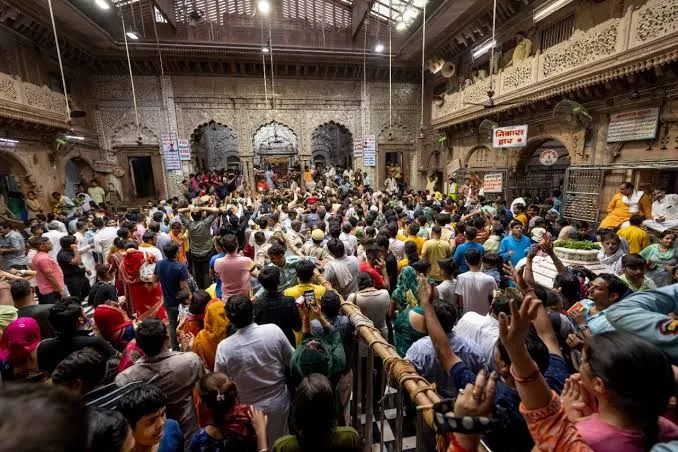
Vrindavan is one of the holiest pilgrimage destinations in India and is closely associated with the life and divine pastimes of Lord Krishna. The town is home to several famous temples, including Banke Bihari Temple, Prem Mandir, ISKCON Temple, Radha Raman Temple & Madan Mohan Temple. Visitors can also explore sacred places such as Nidhivan, Seva Kunj, and Keshi Ghat, which hold great religious significance in Krishna devotion. Every year, millions of devotees visit Vrindavan to seek blessings and experience its peaceful spiritual atmosphere.
Vrindavan is an ancient holy town in Uttar Pradesh, revered as the sacred forest where Lord Krishna spent his childhood and performed leelas (divine pastimes). Named after the holy Tulsi plant (Vrinda), the physical town was lost over time until it was rediscovered in 1515 by the Bengali saint Chaitanya Mahaprabhu. [
Mythological Origins
According to Hindu scriptures like the Bhagavata Purana, Vrindavan is considered a transcendental realm. It is the legendary backdrop for the eternal love story of Radha and Krishna, the Maharaas (divine circular dance) with the gopis (cowherd maidens), and where Krishna defeated numerous demons.
The 16th-Century Revival
After centuries of obscurity, the town's physical footprint was reclaimed in 1515 when Chaitanya Mahaprabhu arrived to locate and identify lost sacred sites associated with Krishna's youth. He instructed his disciples, the Six Goswamis of Vrindavan (including Rupa Goswami and Sanatan Goswami), to establish temples, write foundational scriptures, and restore the area's spiritual heritage. [1, 2, 3, 4]
Mughal Patronage and Raids
The town’s development accelerated rapidly in the late 16th century. In 1570, Emperor Akbar visited the region and granted permission to use red sandstone to build grand shrines. This led to the construction of magnificent temples like the Madan Mohan Temple (built around 1580) and the seven-story Govind Dev Temple (built by Raja Man Singh in 1590). However, the town suffered significant setbacks in 1670 during the reign of Aurangzeb, who destroyed several temples. Fearing desecration, devotees relocated many of the original deities to safe havens in Rajasthan.
The Modern Era
Vrindavan experienced a massive architectural and cultural resurgence in the 19th century under British administration, marked by the construction of the Dravidian-style Sri Rangji Temple in 1851.
Today, Vrindavan is often called the "City of 5,000 Temples" and remains a major global pilgrimage center. Notable milestones in the town's contemporary history include:
- The ISKCON Movement: The construction of the Krishna-Balaram Temple in 1975 by A.C. Bhaktivedanta Swami Prabhupada, which introduced Vrindavan to a massive influx of international devotees.
Goverdhan
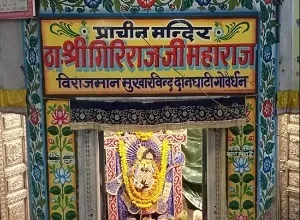
Goverdhan is a sacred town in the Braj region and is renowned for Govardhan Hill (Giriraj Ji), which Lord Krishna is believed to have lifted to protect the people of Braj. The main attraction is the Govardhan Parikrama, a revered pilgrimage route of approximately 21 kilometres, undertaken by thousands of devotees throughout the year. Other important religious sites include Mansi Ganga, Kusum Sarovar, Radha Kund, Shyam Kund, Danghati Temple, and Govind Kund. Goverdhan is a peaceful destination that offers devotees an opportunity to deepen their spiritual connection through prayer and pilgrimage.
Govardhan Giriraj Ji, located in the Braj region of Uttar Pradesh near Mathura, is a sacred sandstone hill revered as an embodiment of Lord Krishna. According to legend, Lord Krishna lifted this hill on his little finger for seven days to protect the villagers of Braj from Lord Indra's torrential rains.
The history and mythological significance of Giriraj Ji are deeply embedded in Hindu texts like the Garg Samhita and the Shrimad Bhagavatam. Here are the key chapters of its history:
- The Age of Lord Rama: The Ramayana notes that Giriraj, a mountain from the Himalayas, wished to serve in constructing the bridge to Lanka. Because the bridge was already complete, Lord Rama blessed Giriraj, assuring him that he would be worshipped directly when Lord Krishna appeared in the upcoming Dwapara Yuga.
- The Govardhan Puja: In the Dwapara Yuga, Lord Krishna convinced the cowherds of Braj to stop worshipping Lord Indra and instead worship Govardhan Hill, declaring that the hill was non-different from the Supreme Lord Himself. This initiated the Annakuta tradition, where massive offerings of food are made to the hill.
- Curse of Sage Pulastya: Mythology dictates that Sage Pulastya brought the hill from the Himalayas to Mathura. When the hill became too heavy, the sage cursed Govardhan to sink into the earth by the measurement of a single mustard seed every day until it eventually disappears.
- Shri Chaitanya Mahaprabhu (1515 CE): When the 16th-century saint Chaitanya Mahaprabhu visited Braj, he refused to walk on Govardhan Hill, viewing it as the literal body of Lord Krishna. This solidified the practice of Parikrama (circumambulation) rather than climbing the hill.
Barsana
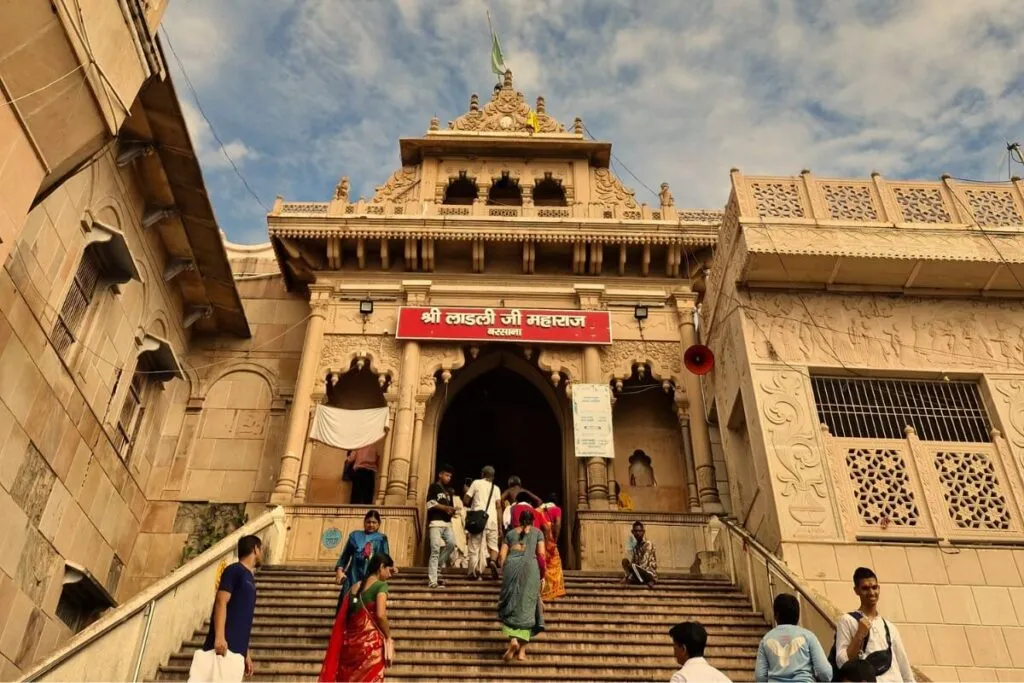
Barsana is traditionally regarded as the birthplace of Shri Radha Rani and is one of the most important pilgrimage sites in the Braj region. The town is famous for the Shri Radha Rani Temple (Ladli Ji Temple), situated on the Bhanugarh Hill, which attracts devotees from across the country. Other notable places include Maan Mandir, Kirti Mandir, Mor Kutir, and Rangeeli Mahal. Barsana is also widely known for its vibrant Lathmar Holi celebrations, which reflect the cultural and devotional traditions associated with Radha and Krishna. A visit to Barsana offers a unique blend of spirituality, heritage, and devotion.
Barsana, located approximately 41 km from Mathura in Uttar Pradesh, is one of the most sacred destinations in Braj Dham and is traditionally revered as the birthplace of Shri Radha Rani, the eternal consort of Lord Krishna. In ancient times, the town was known as Vrishabhanupur, named after King Vrishabhanu, the father of Radha Rani.
According to Hindu tradition, as the threats of King Kansa increased in Gokul, King Vrishabhanu moved his family from Raval to the peaceful hills of Barsana, making it the divine abode of Radha Rani. Ancient scriptures such as the Padma Purana describe Barsana as a sacred place where Lord Brahma performed intense penance to witness the eternal pastimes of Radha and Krishna. It is believed that Lord Brahma later manifested as the four sacred hills of Barsana—Bhanugarh, Vilasgarh, Maangarh, and Daangarh, symbolizing the four Vedas.
The town is home to the famous Shri Radha Rani Temple (Ladli Ji Temple), situated atop Bhanugarh Hill. Tradition holds that the earliest shrine dedicated to Radha Rani was established by Vajranabh, the great-grandson of Lord Krishna. After remaining hidden for centuries, the sacred sites of Barsana were rediscovered in the 16th century by Narayan Bhatt Goswami, a renowned disciple of Sri Chaitanya Mahaprabhu. The present-day Ladli Ji Temple was constructed in 1675 by Raja Bir Singh Deo and remains the spiritual heart of Barsana.
Today, Barsana attracts millions of devotees from across India and around the world. The town is especially famous for its vibrant Lathmar Holi, a centuries-old festival celebrating the playful traditions of Radha and Krishna. With its ancient temples, sacred hills, rich history, and devotional atmosphere, Barsana offers an unforgettable spiritual experience for every visitor, making it an essential destination in every Braj Dham Darshan Tour Package.