Char Dham Yatra Tour Package

Char Dham Yatra (Yamunotri, Gangotri, Kedarnath & Badrinath) Tour Package
Experience the Divine Char Dham Yatra – A Sacred Journey Through the Himalayas
Embark on a spiritually enriching pilgrimage with the Char Dham Yatra (Yamunotri, Gangotri, Kedarnath & Badrinath) Tour Package by DFLY Tours & Travels. Considered one of the holiest pilgrimage circuits in Hinduism, the Char Dham Yatra takes devotees through the four sacred shrines of Yamunotri, Gangotri, Kedarnath, and Badrinath, located in the majestic Garhwal Himalayas of Uttarakhand.
According to Hindu tradition, completing the Char Dham Yatra is believed to bring spiritual purification and divine blessings. Every year, thousands of pilgrims undertake this sacred journey to seek the blessings of Goddess Yamuna, Goddess Ganga, Lord Shiva, and Lord Vishnu while experiencing the breathtaking beauty of the Himalayas.
The journey usually begins from Haridwar or Rishikesh, passing through scenic mountain roads, river valleys, dense forests, charming hill towns, and picturesque landscapes that make the pilgrimage both spiritually fulfilling and visually unforgettable.
Yamunotri – The Sacred Source of River Yamuna
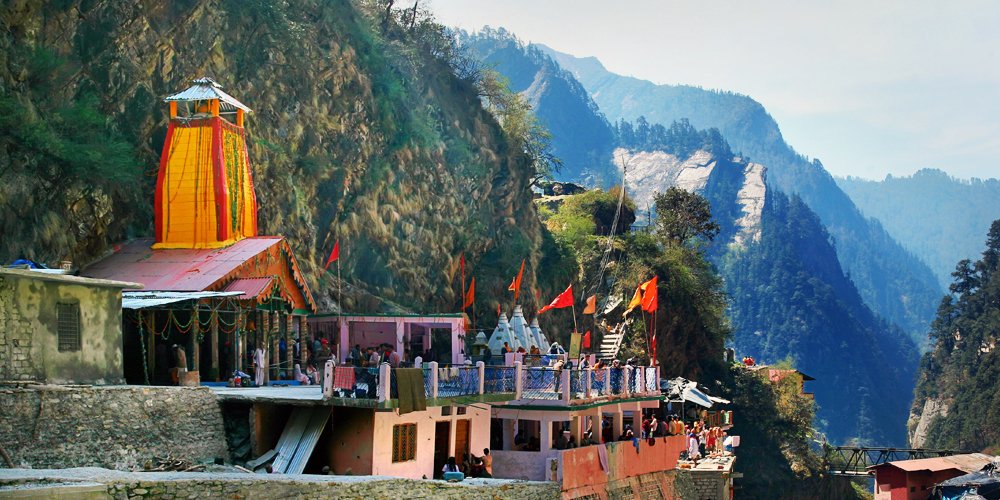
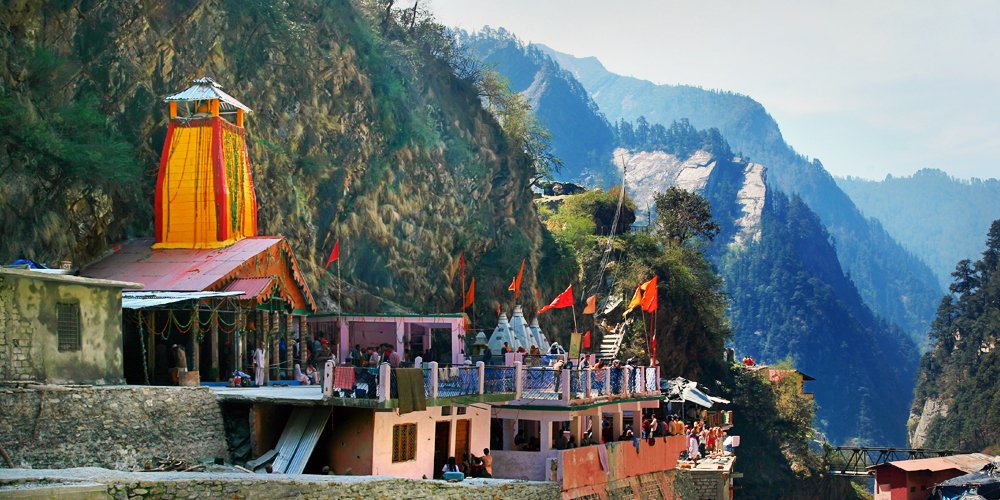
Yamunotri is the first destination of the Char Dham Yatra and is dedicated to Goddess Yamuna. Situated at an altitude of approximately 3,293 meters (10,804 feet), the temple is surrounded by snow-covered mountains and pristine natural beauty.
Pilgrims also visit the sacred Surya Kund, a natural hot water spring where devotees prepare offerings before entering the temple. The peaceful surroundings and spiritual atmosphere make Yamunotri an inspiring beginning to the pilgrimage.
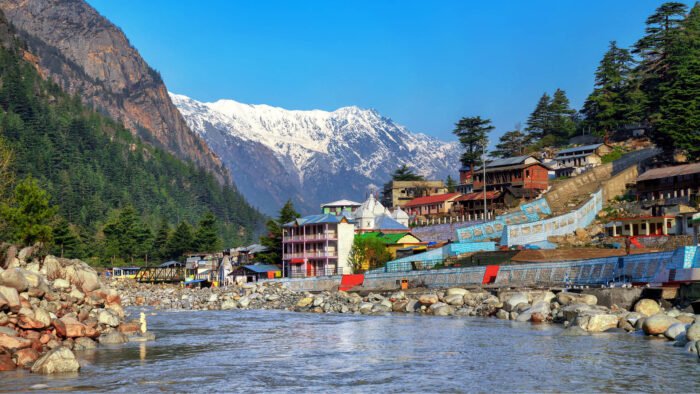
Gangotri’s history seamlessly weaves ancient Hindu mythology with 18th-century Gurkha militarism. The site gained prominence as the sacred origin of the Ganges (Bhagirathi) River, where King Bhagiratha famously performed penance to bring Goddess Ganga to Earth. The current temple was built by the Nepalese general Amar Singh Thapa.
According to Hindu texts like the Valmiki Ramayana and the Puranas, the area has been a spiritual refuge for millennia. King Bhagiratha undertook intense meditation at this location to liberate the souls of his ancestors. To prevent the mighty river's forceful descent from shattering the Earth, Lord Shiva caught the gushing Goddess Ganga in his matted locks, releasing her gently at what is now Gangotri.
The Temple’s Construction
The present-day Gangotri Temple, built in the classic North Indian Nagara style, was erected in the early 18th century by Gurkha commander Amar Singh Thapa. Standing at an altitude of approximately 3,415 meters, the white marble structure honors the river goddess and features five tall shikharas with three golden spires.
- The Glacier Source: The river is known as Bhagirathi at its source and becomes the Ganga only after its confluence with the Alaknanda at Devprayag. The actual source is the Gaumukh glacier, located a 19-km trek from the temple.
- Seasonal Migration: Because Gangotri becomes snowbound and uninhabitable in the winter, the temple closes every year on Diwali. The idol of Goddess Ganga is then transferred to the nearby village of Mukhba (near Harsil), where she is worshipped throughout the winter months.
- Custodianship: Religious rituals and daily aartis at the shrine are traditionally supervised by the Semwal family of pujaris, who hail from Mukhba
Gangotri – The Origin of the Holy Ganga
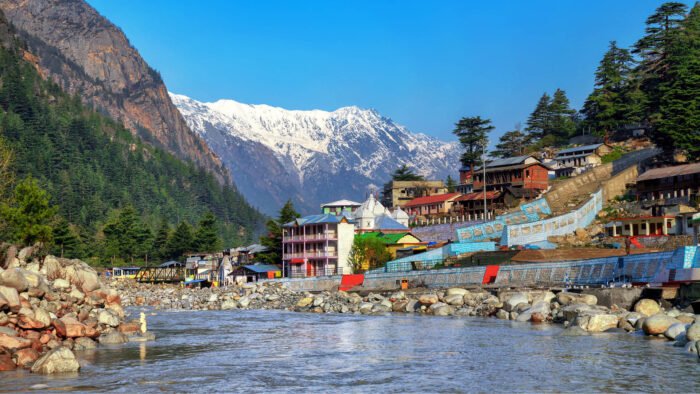
The second destination is Gangotri, dedicated to Goddess Ganga, one of the most sacred rivers in India. Located at an altitude of around 3,100 meters (10,200 feet) on the banks of the Bhagirathi River, Gangotri Temple is believed to mark the place where Goddess Ganga descended to Earth.
The temple, surrounded by towering Himalayan peaks and flowing glacial waters, offers a peaceful environment for prayer, meditation, and spiritual reflection.
According to Hindu lore, King Bhagiratha performed severe penance at the Bhagirath Shila (a sacred stone near the temple) to bring the Ganga down to earth and cleanse his ancestors' souls. The river's torrential descent was controlled by Lord Shiva, who caught her in his matted locks (Jata) to break the fall. Because of this, the river at its source is known as the Bhagirathi, later taking on the name Ganga after merging with the Alaknanda at Devprayag.
- 18th Century: The present-day Gangotri Temple was built by the Nepalese Gorkha General Amar Singh Thapa in the early 1700s. Prior to this, devotees simply worshiped the river's stream at the bank.
- 20th Century: The temple structure fell into disrepair and was later beautifully restored by Maharaja Madho Singh II of Jaipur.
- Gaumukh: The actual glacial source of the river is located at Gaumukh (a 19 km trek from the main town).
- Seasonal Shifts: The temple closes on Diwali every year and the idol is moved to the nearby village of Mukhba (near Harsil) for the winter months.
Kedarnath – The Sacred Jyotirlinga of Lord Shiva
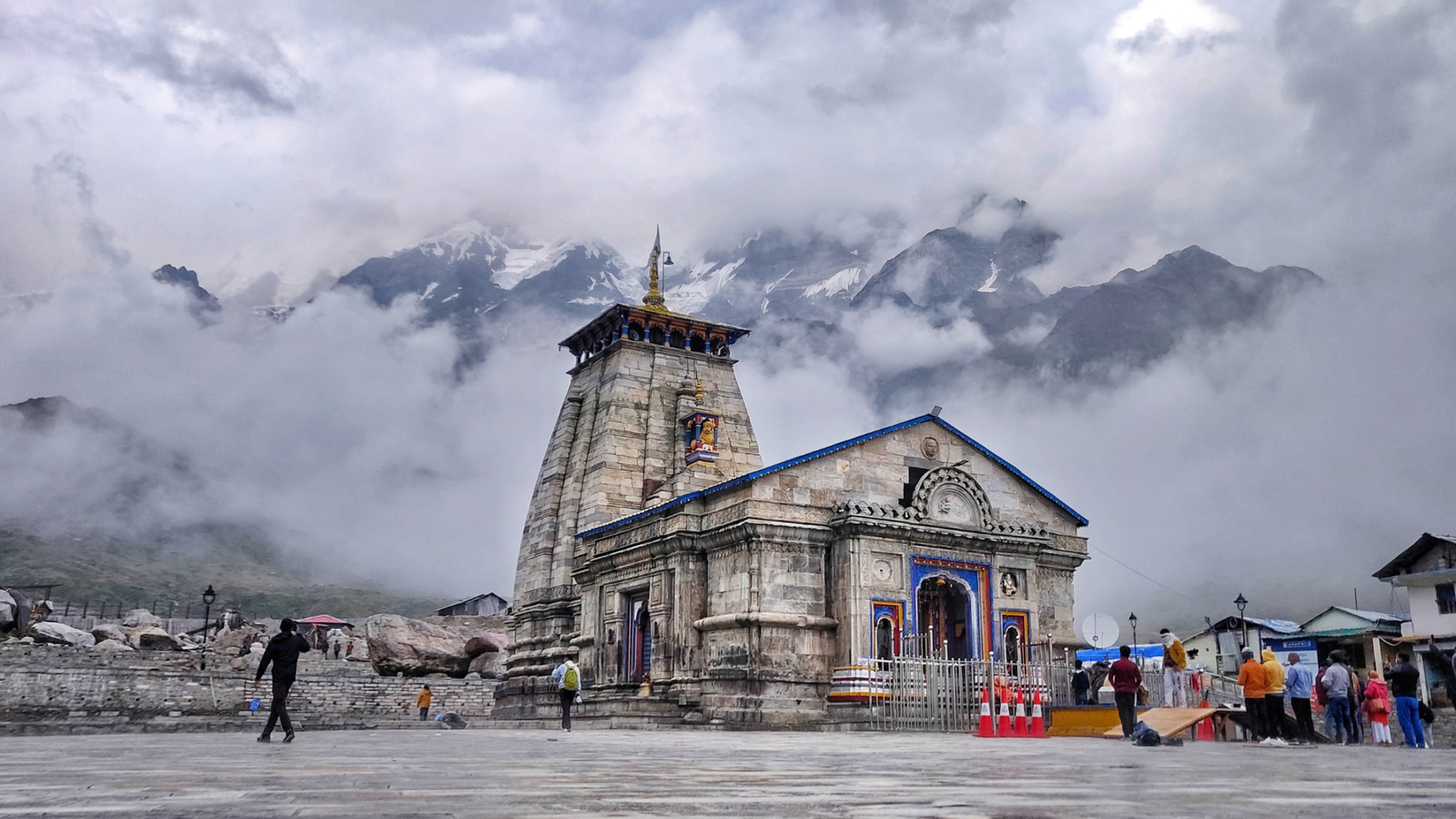
One of the most important temples in Hinduism, Kedarnath Temple is dedicated to Lord Shiva and is one of the Twelve Jyotirlingas. Located at an altitude of approximately 3,583 meters (11,755 feet) near the Mandakini River, the temple is surrounded by spectacular Himalayan mountains and glaciers.
Pilgrims reach Kedarnath through a scenic trek from Gaurikund or by helicopter services (subject to availability). The temple's ancient stone architecture, peaceful surroundings, and spiritual significance make it one of the most memorable experiences of the Char Dham Yatra.
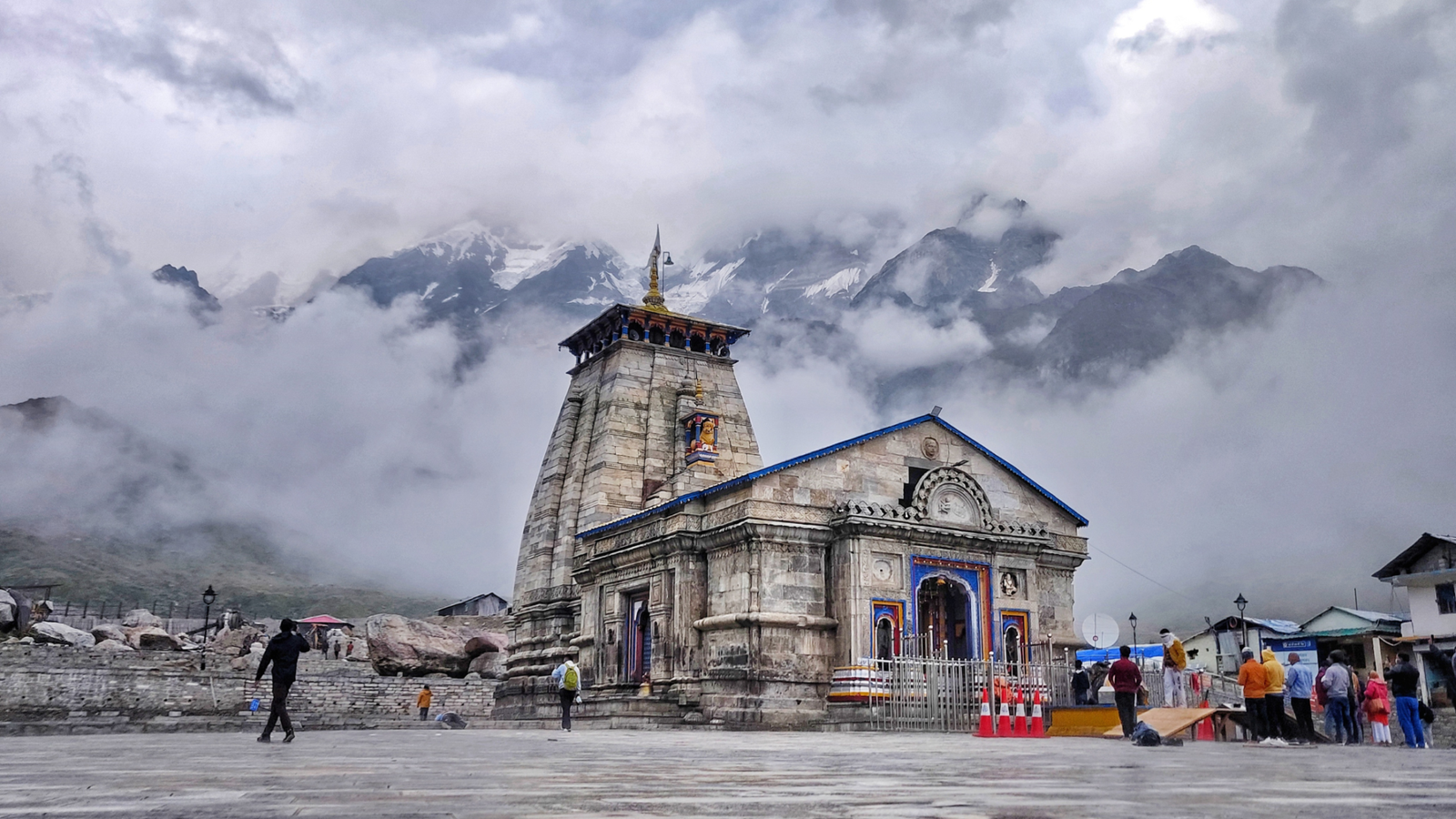
The Kedarnath Temple is an ancient 8th-century shrine dedicated to Lord Shiva. Believed to be originally built by the Pandavas to atone for their sins from the Mahabharata war, it was later revived by the philosopher Adi Shankaracharya. It stands at 3,583 meters and is one of India's 12 sacred Jyotirlingas
According to Hindu legends, after the Kurukshetra war, the Pandavas sought Lord Shiva's forgiveness for killing their kin. To evade them, Shiva transformed into a bull and dove into the ground at Kedarnath, leaving only his hump on the surface. The hump remains the object of worship in the Garbhagriha.
The 2013 Flash Floods
During the devastating 2013 Uttarakhand floods, the town and surrounding valleys suffered massive destruction, but the Kedarnath shrine remarkably survived. A massive boulder known as the Bhim Shila rolled down from the mountains and lodged directly behind the temple, splitting the glacial debris and floodwaters around the structure, sparing it from ruin.
Modern Significance
Today, Kedarnath is a core part of the Uttarakhand Char Dham Yatra and is visited by thousands of pilgrims every year. Because of the harsh Himalayan winters, the temple is only open from late April (Akshaya Tritiya) until early November (Bhai Dooj), at which point the deity's idol is ceremoniously moved to the Omkareshwar Temple in Ukhimath.
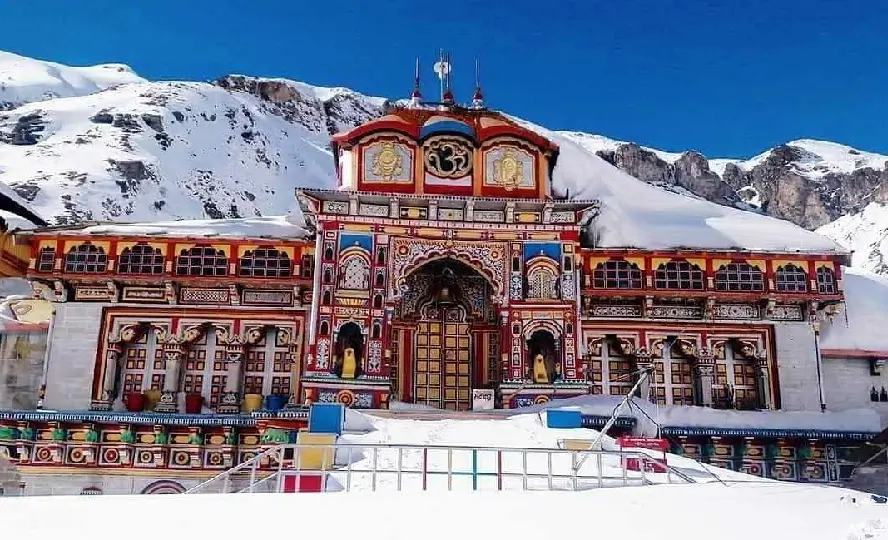
Badrinath – The Sacred Abode of Lord Vishnu
The final destination of the pilgrimage is Badrinath, one of the holiest temples dedicated to Lord Vishnu. Situated at an altitude of approximately 3,133 meters (10,279 feet) on the banks of the Alaknanda River, the temple is surrounded by the magnificent Nar and Narayan mountain ranges.
Before entering the temple, devotees traditionally take a holy dip in Tapt Kund, a natural hot water spring. Nearby attractions such as Mana Village, Vyas Gufa, Ganesh Gufa, Bheem Pul, and the Saraswati River add historical, cultural, and mythological significance to the visit.
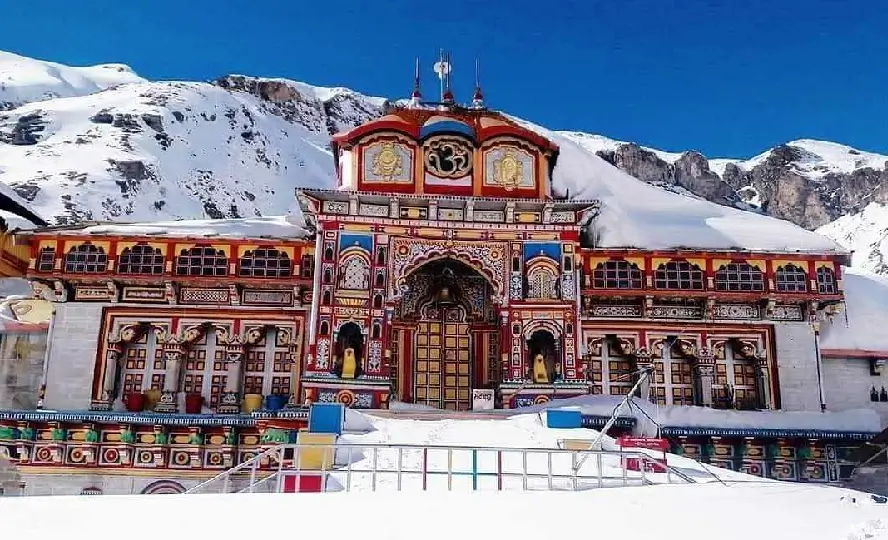
The Badrinath Temple, located in the Garhwal Himalayas of Uttarakhand, India, is dedicated to Lord Vishnu and stands as one of the sacred Char Dham and Divya Desam pilgrimage sites. Rooted in Vedic texts and ancient mythology, it is believed to be the spot where Lord Vishnu meditated while Goddess Lakshmi sheltered him by transforming into a berry (badri) tree.
Before being established as a Hindu shrine, the site featured a structure with Buddhist-style architecture. In the late 8th or 9th century, the philosopher Adi Shankaracharya played a pivotal role in the temple's modern foundation. He retrieved the idol—a one-metre-tall, black saligram image of Lord Badarinarayan—from the nearby Alaknanda River and enshrined it in a cave near the Tapt Kund hot springs.
Due to avalanches and earthquakes, the temple underwent multiple restorations. The present structure was expanded and reconstructed in the 16th and 17th centuries by the Kings of Garhwal.
The temple is closed every year from mid-November to April due to heavy snowfall in the region. During this winter period, the deity's idol is temporarily relocated to the nearby Pandukeshwar village, where worship continues uninterrupted.
Experience the Spiritual & Natural Beauty of Uttarakhand
Beyond its religious importance, the Char Dham Yatra offers an extraordinary opportunity to experience the pristine beauty of Uttarakhand. Throughout the journey, travelers witness snow-capped Himalayan peaks, glacial rivers, waterfalls, lush valleys, alpine forests, and charming mountain villages.
The pilgrimage also passes through important spiritual destinations such as Haridwar, Rishikesh, Uttarkashi, Guptkashi, Joshimath, Rudraprayag, and Devprayag, each holding great religious and cultural significance.
Why Choose the Char Dham Yatra Tour Package?
The Char Dham Yatra Tour Package by DFLY Tours & Travels is carefully planned to provide a safe, comfortable, and spiritually fulfilling pilgrimage. With quality accommodations, well-maintained transportation, experienced drivers, and dedicated travel assistance, every aspect of the journey is managed to ensure a hassle-free experience.
Whether you are traveling with family, senior citizens, friends, or in a pilgrimage group, this package allows you to experience the divine blessings of Yamunotri, Gangotri, Kedarnath, and Badrinath while exploring the magnificent Himalayan landscapes.
Join DFLY Tours & Travels for a memorable Char Dham Yatra and discover the perfect blend of faith, devotion, nature, and spiritual peace in one of India's most sacred pilgrimage circuits.